The Barton Springs Bridge Is Under Federal Review. Most of Barton Hills Never Has to Cross It.
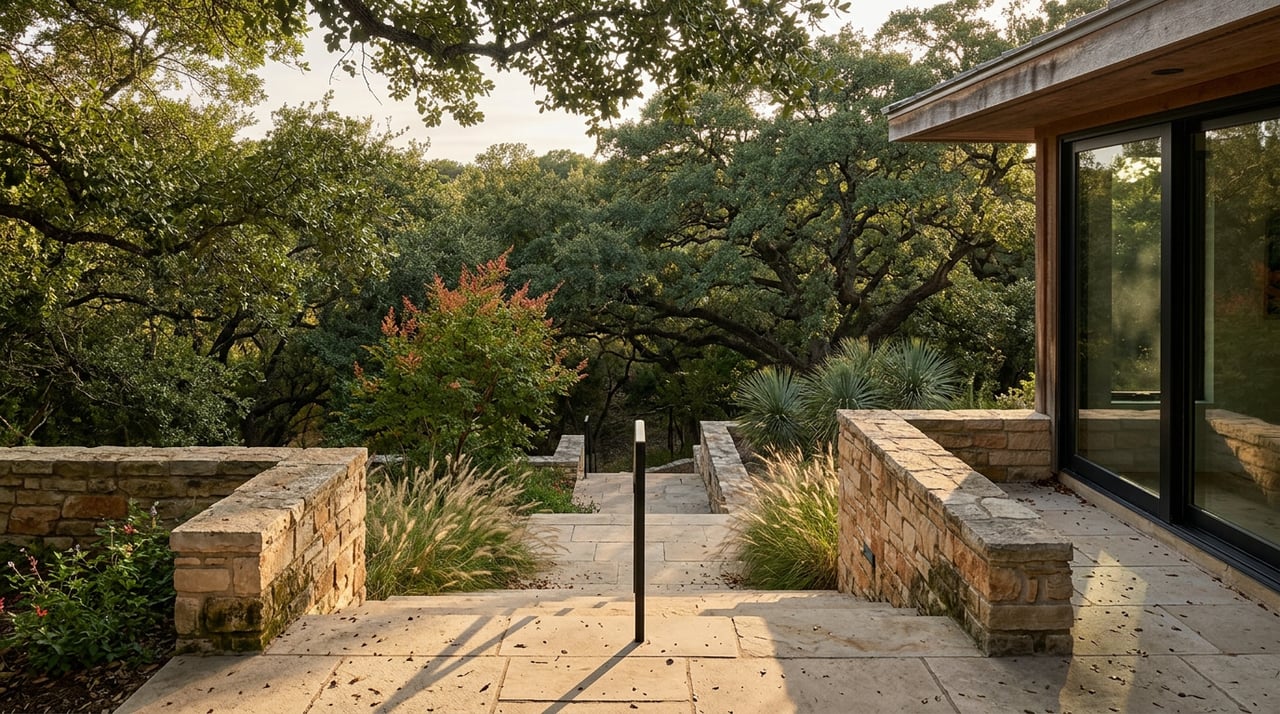
Every visitor who drives to the Greenbelt this fall will do the same thing: park near Zilker, walk over the Barton Springs Bridge, and follow the crowd down to the water. It is the version of the Greenbelt that shows up in every guidebook and every "best swimming holes in Austin" list. It is also, for most of Barton Hills, not how anyone actually gets there.
The bridge itself turned 100 years old this past June, and it is currently the subject of an active federal review that will decide whether it gets torn down. That fight matters to Barton Hills in a way it does not to the rest of the city, because this neighborhood sits on the other side of it, with its own set of doors into the same stretch of creek. Residents here have never really needed the bridge. The question hanging over it right now is worth understanding anyway, because it says something about how this corner of Austin actually functions day to day.
Ask someone in Zilker how to reach the Greenbelt and they will point you toward Loop 360 or the main entrance off Barton Springs Road. Ask someone who lives on Barton Hills Drive and they will shrug and point down their own street.
The Gus Fruh access point sits at 2632 Barton Hills Drive, named for an environmental engineer, and it drops straight down from a residential curb into one of the creek's deepest swimming holes when water is flowing, alongside a limestone wall climbers call Urban Assault. There is no visitor parking lot here. Street parking along Barton Hills Drive is the whole operation, and that is by design: this is a neighborhood trailhead, not a tourist destination with a turnstile.
A short distance away, the Homedale Drive access point cuts through near Barton Hills Elementary and leads north to Campbell's Hole, a swimming spot whose depth rises and falls with recent rain, the same as most of the creek. Neither of these entrances appears on the postcard version of the Greenbelt. Both of them are a five-minute walk from someone's front door in Barton Hills.
The city's own parks department describes the Greenbelt as offering more than twelve miles to explore, while the core corridor most people mean when they say "the Greenbelt," the stretch running from Zilker down toward Camp Craft Road, is closer to 7.5 miles. That gap between the two numbers is the rest of the trail system: the spur trails, the neighborhood cut-throughs, the access points that don't get photographed because they're not meant to be found by anyone who isn't already local.
Right now, moving into late September, this matters more than it did in July. The creek typically runs low through the hottest part of summer and starts to fill back in with the first real fall rains, which is also when the crowds at the main entrances start to thin. Spring and fall are consistently the two windows locals and outdoor guides point to for the best combination of water and quiet, and Barton Hills residents get to spend that window walking down from their own street instead of driving in and hunting for a parking spot along Barton Springs Road.
None of this means the bridge is irrelevant to Barton Hills. It is the most direct walking connection between the neighborhood and Zilker Park, and this year it became the center of a genuine preservation fight.
The bridge opened on June 21, 1926, carrying Barton Springs Road traffic over Barton Creek at the edge of what would become one of the city's most visited parks. Exactly a century later, on June 21, 2026, the Save Our Springs Alliance organized a centennial celebration at the bridge, with morning swimming at Barton Springs followed by an evening of live music from Bill Oliver and the Otter Space Band, a mural by local artist Fabian Rey, and a march along the Ann and Roy Butler Hike-and-Bike Trail underneath the span itself. Members of the Barton Hills Neighborhood Association, including BHNA representative Worthy LaFollet, joined that march.
The celebration doubled as a protest. The city has secured a $32 million Federal Highway Administration grant to replace the bridge, widening it and adding dedicated hike and bike lanes, and as of this spring the project had reached its 90 percent design milestone. Because federal money is involved, the replacement is subject to a National Environmental Policy Act review, a process the Austin American-Statesman reported typically runs 12 to 18 months and is expected to wrap up sometime in 2027. That review will weigh replacement against rehabilitation before any final decision gets made.
Preservation Texas added the bridge to its 2026 Most Endangered Places list that same spring, citing both its historic character and the demolition threat. Save Our Springs Executive Director Bill Bunch put the stakes plainly at the June celebration, arguing that replacing the bridge would "hurt the creek, hurt the park," and cost Austin something it can't easily rebuild. The city, for its part, has pointed to real concrete deterioration and ADA compliance gaps in the current structure as reasons a replacement is overdue.
Nothing here has been decided. The federal review is still open, the design is not final, and the earliest anyone expects a resolution is next year. For a neighborhood that treats this bridge as a walking connection to the park rather than a commute, that timeline is worth watching rather than worrying over.
What makes Barton Hills unusual is that it has a foot in both stories at once. The neighborhood association is showing up to a century-old preservation fight over a bridge most residents don't strictly need, because it is still the connective tissue to Zilker Park, the pool, and the festival lawn on the other side. At the same time, day to day, the neighborhood's own quiet trailheads at Gus Fruh and Homedale keep functioning exactly as they always have, unaffected by any of it.
That is not a coincidence. It is what happens when a neighborhood is old enough and connected enough to the land around it to have relationships with it that outsiders don't. The Barton Springs Bridge debate will eventually resolve one way or another, on a timeline the city itself has laid out for 2027. Whatever happens to that bridge, the residential entrances that let Barton Hills reach the creek without ever standing in line at Zilker will still be there, a short walk down the street, working the way they've worked for decades.
If you already live here, you likely knew about one of these access points and not the other. If you're getting to know the neighborhood, the version worth understanding is this: Barton Hills doesn't wait on the same infrastructure everyone else does to reach the outdoors that define it. That's a small thing on any given Tuesday. Over the length of living somewhere, it adds up to a different relationship with the place than the one most visitors ever get.
For more on what makes this stretch of South Austin work the way it does, from trail access to the housing that surrounds it, Cord Shiflet has spent years learning this neighborhood from the inside. Reach out anytime you want a local read on Barton Hills, whether you're planning a weekend or something longer term.
Stay up to date on the latest real estate trends.
Relocation
Cord prizes trust. His clients trust him to value and protect their real estate investments. And how’s this for a bonus? He is fun to work with because he loves his work. Whether representing an A-list celebrity or Austin executive, Cord personifies Texas’ entrepreneurial spirit: Play hard. Have fun. Work harder.
CORD SHIFLET
EMAIL US: [email protected]
CALL US: (512) 751-2673
3825 Lake Austin Blvd., #501 Austin, TX 78703