What Actually Decides How Many Homes Fit on a Hyde Park Lot
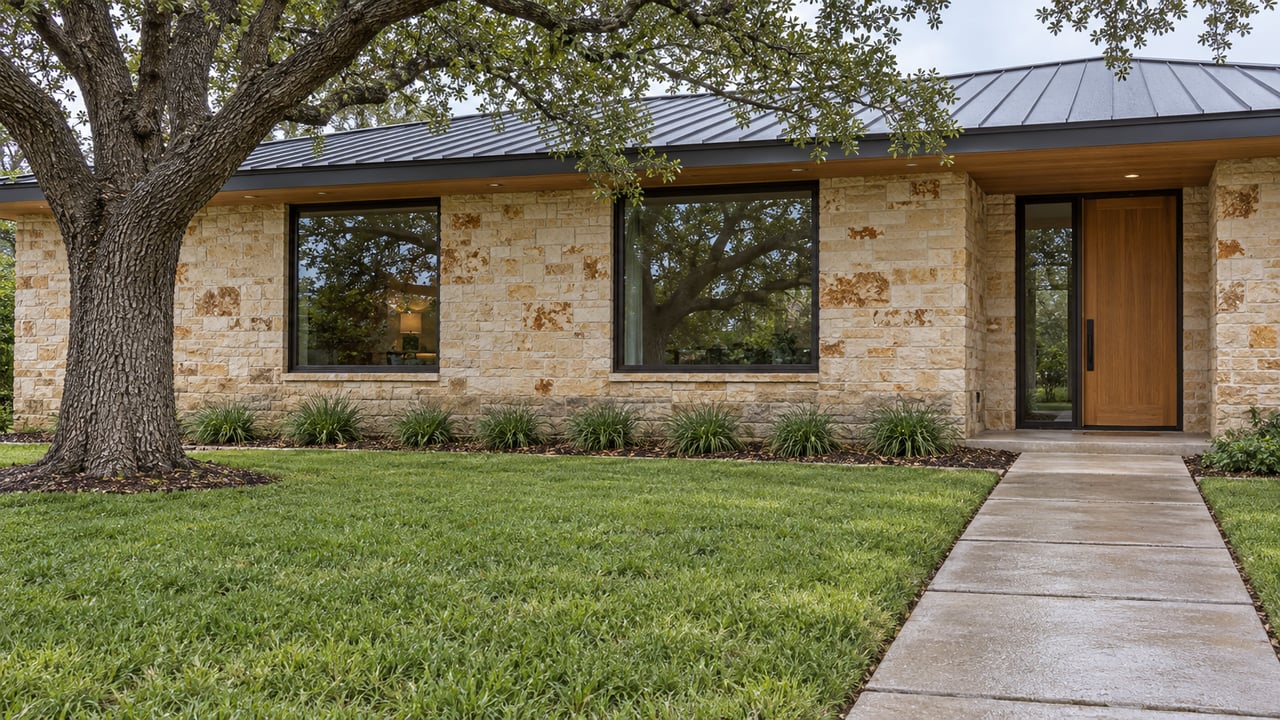
The Craftsman house at 4309 Avenue D has been two homes before. City directory research shows it was built as one residence and split into two units early in the twentieth century, which is why it has two front doors and no raised porch. The current plan would go back to a single-family house in front, add a rear addition, and build a second dwelling unit over the alley-facing garage, keeping that garage's original north and east walls.
On October 7, 2026, the plan went before Austin's Historic Landmark Commission. City staff did not recommend approval. They recommended postponing the hearing and sending the project to the Architectural Review Committee, with November 4 suggested as the next hearing date. One of the concerns in the staff review was small and specific. Removing the second front door, the simple wood posts and the concrete pad would erase a visible record of how the house changed over time, so staff suggested keeping the second doorway, fixed in place.
That level of detail is where Hyde Park's real development limits sit. Austin City Hall is preparing to revisit a different rule, the neighborhood's minimum lot size, and that rule matters less than the coverage suggests.
Each Hyde Park lot answers to more than one set of rules, and each set controls something different.
| Layer | What it controls | Status as of October 12, 2026 |
|---|---|---|
| HOME Phase 1, adopted Dec. 7, 2023 | Up to three units on SF-1, SF-2 and SF-3 lots; no on-site parking requirement | In effect in Hyde Park |
| HOME Phase 2, adopted May 16, 2024 | Small-lot homes on lots from 1,800 to just under 5,750 sq ft | Overridden in Hyde Park where the NCCD conflicts |
| Hyde Park and North Hyde Park NCCDs | 5,750 sq ft minimum lot in most residential districts; 30-foot height limit | Under city review, initial amendments due by Dec. 3, 2026 |
| Hyde Park Local Historic District | Design review for exterior work on contributing homes and all new construction | Unchanged |
The adoption dates, the three-unit cap and the small-lot range in the first two rows come from the City of Austin's HOME page. The way they apply in Hyde Park comes from the Hyde Park Neighborhood Association's May 2024 summary. It reported Council Member Zo Qadri's statement that Phase 2 overrides base zoning but not NCCDs, so the NCCD's 5,750-square-foot minimum still applies. The same summary says Phase 1's three-unit, occupancy and parking changes do apply in Hyde Park. The association also describes the NCCD's 30-foot height limit and its ban on front-facing garages. That reading comes from the neighborhood association, not from a city FAQ. It is the clearest public statement of how the layers fit together.
The small-lot pathway covers lots of 1,800 square feet up to just under 5,750, and 5,750 is exactly where the Hyde Park NCCD sets its floor. The NCCD effectively switches off Phase 2 in the neighborhood. It does not switch off the three-unit rule.
On May 7, 2026, Council adopted Resolution 20260507-026. It directs staff to bring zoning in line with HOME and to "research, analyze and present options" wherever combining districts or overlays apply. The resolution's Exhibit A lists the districts to review: the Hyde Park NCCD, the North Hyde Park NCCD, North University, Fairview Park, the 11th and 12th Street NCCDs, the Lake Austin overlay and the Waterfront Overlay. Community Impact reported that it passed 9-1.
If staff eventually recommend lowering Hyde Park's lot floor, citywide results suggest the effect would be modest. Phase 2 is the part of HOME that has seen the least activity:
Most of the activity is in Phase 1, the three-unit rule, which already applies in Hyde Park. The lot sizes behind those projects point the same way. The Austin Board of Realtors' April 2026 HOME report looked at 57 HOME units built and closed in the City of Austin in 2025. The median lot under those projects was 6,708 square feet, measured as the whole property and not the land per unit. The typical HOME project in 2025 sat on a lot that already clears Hyde Park's 5,750-square-foot minimum. Cutting a lot into smaller pieces is not how most HOME housing is being built. Adding units to a lot of ordinary size is.
Historic review is the layer that affects those ordinary lots in Hyde Park. The Hyde Park Local Historic District includes 640 properties, 480 of them classified as contributing. Exterior work on contributing homes and all new freestanding construction, including on noncontributing sites, requires historic review. HOME does not bypass that process. The Phase 1 ordinance itself says that projects using its preservation bonus inside a historic district must meet the district's design standards, and those standards control over the bonus.
Two 2026 cases show how this works in practice.
304 W. 42nd St. An application proposed demolishing a contributing bungalow from about 1932 and building a two-story house across two lots. Staff found the new design mostly met the standards. They could not recommend demolishing a contributing building, and they proposed either postponing the case to consider alternatives or denying the certificate. The commission postponed the case on June 3, and it was still on the July 1 under-review list. Our research did not confirm what happened after that.
4309 Avenue D. This is the garage-unit project described at the top. Its design keeps the historic house and places the new unit at the alley, which follows the standards' preference against demolition. Even so, the project is headed to a committee and a second hearing, not a vote.
In neither case did lot size or unit count drive the review. The questions were whether a 1930s building could come down and whether a second front door should stay. A different HOME case in another historic district shows the review covers HOME projects too. On the same October 7 agenda, a proposal at 2410 E. Martin Luther King Jr. Blvd. in the Rogers Washington Holy Cross Historic District would build two units on a vacant lot "utilizing the HOME ordinance." Staff evaluated it against that district's standards on lot configuration, driveway layout, setbacks and a 27-foot height maximum.
State law has not changed this. Austin's implementation page for SB 840, which took effect September 1, 2025, says the law does not change the city's review processes for local landmarks and historic districts.
The resolution gives a deadline. Initial code amendments must reach Council "no later than December 3, 2026." Austin Planning's June 15 staff memo says progress will be reported through the city's Schedule of Active Code Amendments. As of October 12, our research found no published draft language and no scheduled hearing on the NCCD question. For the NCCDs, the resolution only asks staff to present options. It does not amend any NCCD.
Other parts of the resolution matter more to how projects get built than the lot floor does. They include allowing two units on SF-1, SF-2 and SF-3 lots of at least 3,600 and under 5,750 square feet, letting porches extend up to 50 percent into the front setback, and dropping building-coverage limits for two- and three-unit projects so that impervious cover becomes the main limit. Inside an NCCD, whether any of these apply depends on the options staff bring back. Inside the historic district, every exterior result still goes through design review.
The price data shows what HOME tends to produce. In ABoR's 2025 sample, HOME new construction sold at a median of $750,000 for 1,693 square feet. Traditional new single-family homes on standard lots in the City of Austin sold at a median of $1.58 million for 3,029 square feet. In Hyde Park, a buyer's ability to add or rework a unit depends mostly on whether the house is a contributing structure inside the historic district, and that does not change on December 3.
Does HOME's three-unit rule apply in Hyde Park today? According to the Hyde Park Neighborhood Association's reading, yes. The three-unit, occupancy and parking changes from Phase 1 apply. Projects inside the Local Historic District still go through design review.
Is the 5,750-square-foot minimum going away? It has not changed. Staff are required to present options for the Hyde Park and North Hyde Park NCCDs, with initial amendments due to Council by December 3, 2026. Any change would still need its own Council action.
Is a given lot inside the historic district or only the NCCD? That depends on the parcel. The overlay maps, the zoning, the lot's history and whether the house is classified as contributing all affect what review applies, which is why a parcel-level check comes before any assumption about added units.
If you are weighing a Hyde Park house for what it could become, we can help you find out which of these layers applies to that specific parcel before you commit to a price. Talk with Cord Shiflet Group about the property you have in mind.
This article is general information, not legal, tax or financial advice. Consult a qualified professional about your situation.
Stay up to date on the latest real estate trends.
Relocation
Relocation
Cord prizes trust. His clients trust him to value and protect their real estate investments. And how’s this for a bonus? He is fun to work with because he loves his work. Whether representing an A-list celebrity or Austin executive, Cord personifies Texas’ entrepreneurial spirit: Play hard. Have fun. Work harder.
CORD SHIFLET
EMAIL US: [email protected]
CALL US: (512) 751-2673
3825 Lake Austin Blvd., #501 Austin, TX 78703