You Work on the Future All Day. Here Are 1,228 Acres of the Present.
Relocation
Relocation
In short: Ranch 1228 is a 1,228-acre Texas Hill Country ranch for sale in Burnet County, a little over an hour from Austin, listed with Cord Shiflet of Moreland Properties and Jordan Shipley of Shipley Ranches. It suits an out-of-state buyer, including one from California, who wants usable land, a lodge compound that sleeps 50, and a private retreat.
I am going to guess a few things about you. If I am wrong, no harm done, and you can stop reading.
You live in San Francisco, or close to it. You work on something most people only argue about. Your days go to questions with very long time horizons, the kind where being capable and being careful have to show up together or neither one counts. You are optimistic about where all this goes. You also read the fine print on what could go wrong, and you think both of those belong in the same head.
And sometime in the last year or two, some paper turned into something real.
If that is you, I have a place I would like to show you. I'm Cord Shiflet. I was born and raised in Westlake, on the west side of Austin, and I have been selling real estate out here since 1997. This is not a pitch for a bunker. It is a description of a ranch, and a few things I think you will recognize in it.
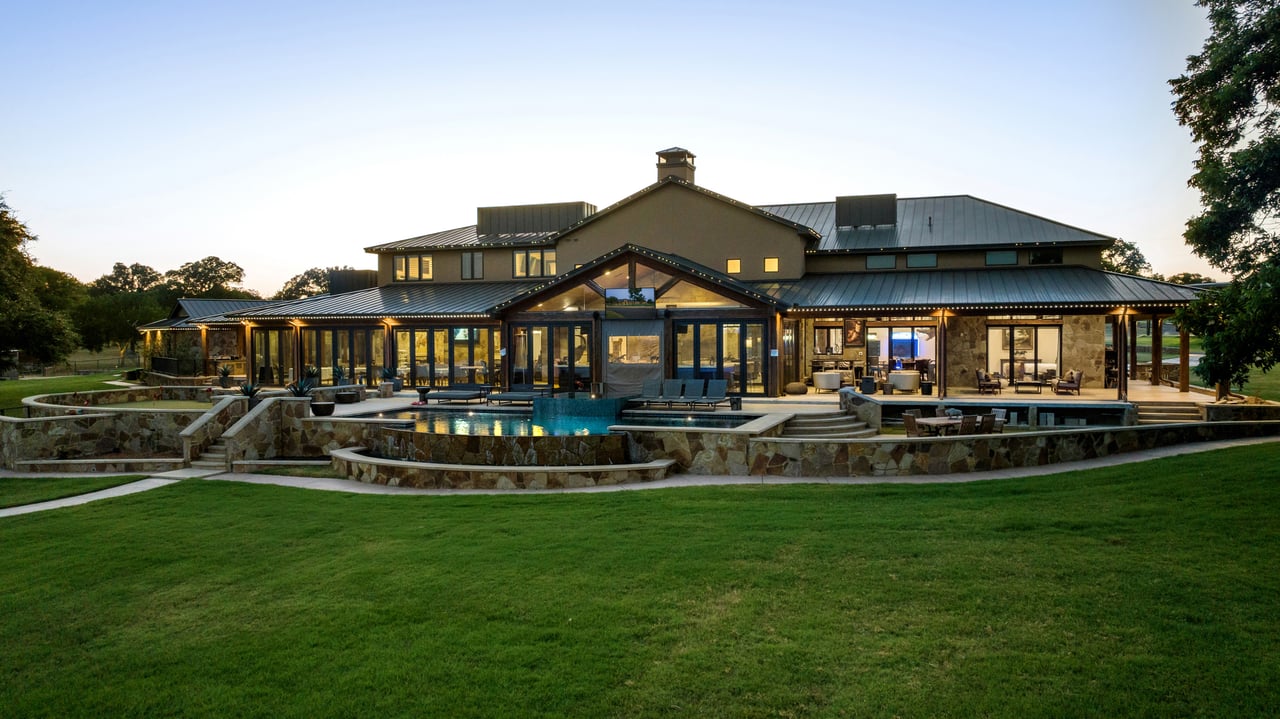
Ranch 1228 is 1,228 acres in Burnet County, between Marble Falls and Burnet, a little over an hour from downtown Austin. I represent it alongside Jordan Shipley of Shipley Ranches, and Robb Report wrote it up in October.
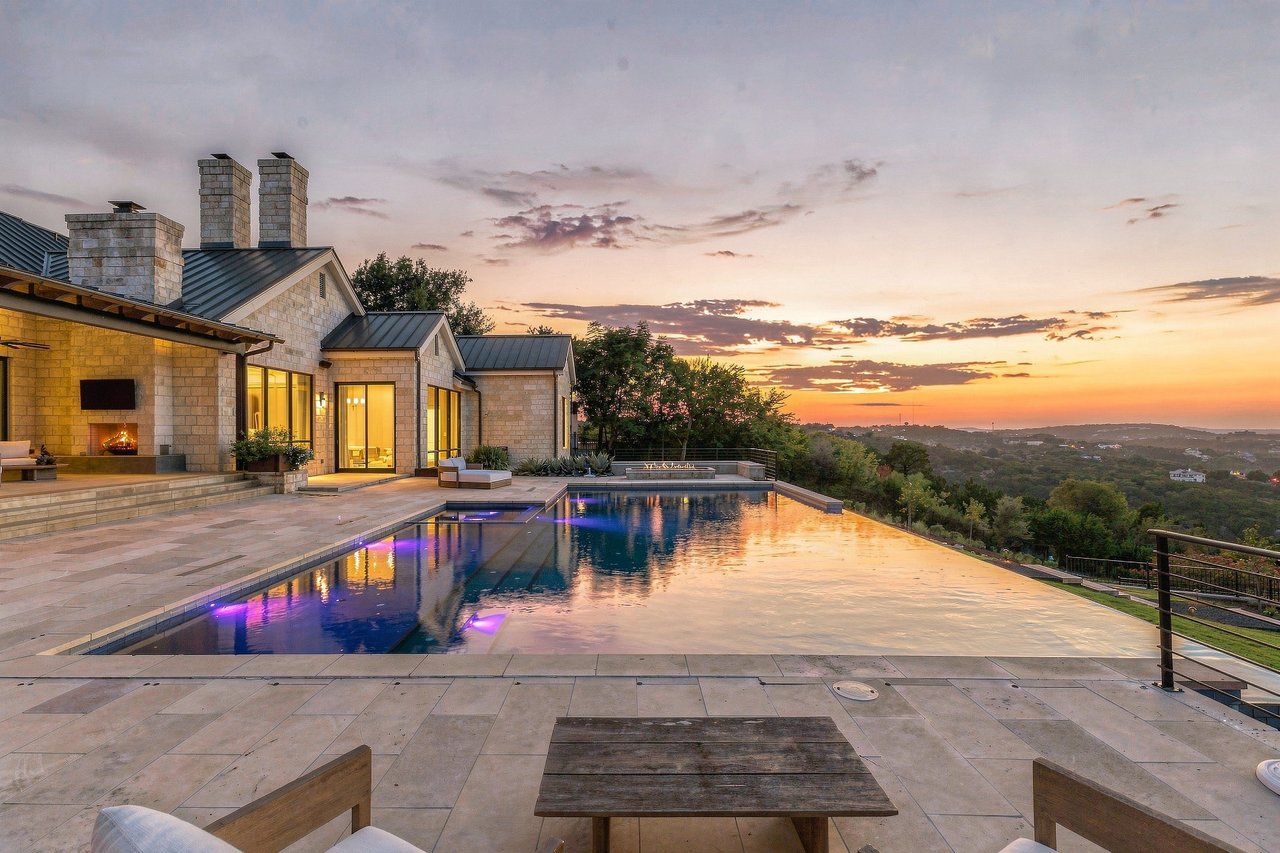
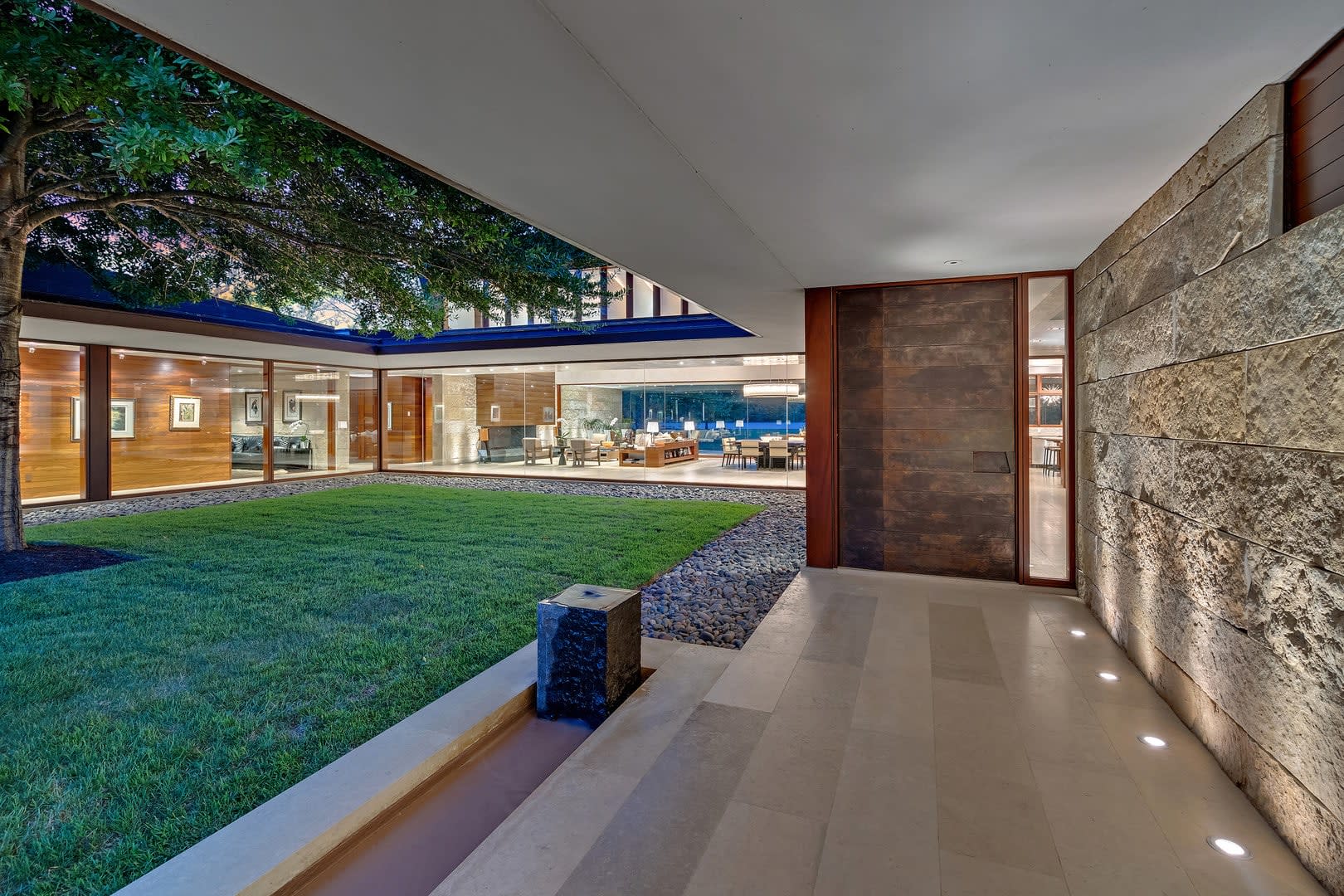
The main lodge is about 14,000 square feet and looks out over a pool and roughly seven acres of lakes. There are three guest lodges, and the whole place sleeps up to 50. There is tennis, pickleball, a skeet range, a fitness center, a rodeo arena, and horse facilities. Behind the high fence live more than 40 species of exotic wildlife. Yes, that includes giraffes.
The current owners bought it in 2020 as a family refuge, then spent years remodeling what was there and building what was not.
A lot of Hill Country land is rock, cedar, and slopes you will never set foot on. You own it on paper and wave at it from a distance.
This ranch is unusually flat and usable, and a road system reaches every corner of it. I like land like that. Nothing on it is a black box. You can drive to any part of the place, look at it, and understand what it is doing and why. If something is off with a fence, a water line, or a herd, you can go find it.
In my experience you can only take good care of something you can see into.
The best ranch owners I know are both. Ranching is big animals, weather, water, and fire. The good ones ask what could go wrong before they ask how fast they can go.
The oldest mistake in this business is deciding how much the land can carry during a good year. A wet spring makes everybody ambitious. The owners who last set their limits ahead of time, write them down, and hold to them when the grass is tall and the temptation is real. I suspect you already have opinions about that.
Same with horses. A horse is stronger than you and faster than you, and it has a mind of its own. Nobody who is good with horses tries to win that with force. You build trust early, you stay consistent, and you make sure the animal has good habits before you ever ask it for speed. People who get that order backward get hurt.
And nobody out here is racing anybody. If there is a competition between neighbors, it is over who leaves their place in better shape. I have always thought that was the right kind.
Thinking. Some mornings out here are a haiku. Most days are a sonnet: they have a shape, and they turn near the end. Stay long enough to watch a full year go by and you get the opus.
Gathering. It sleeps 50, and it has hosted retreats and board meetings. Bring the whole team. Hard conversations go better when there is a horizon in the room.
Family. It was bought as a refuge, and it shows.
The long term. Land is a hundred-year asset, and you never really own it. You look after it for whoever comes next. If your work has you asking who benefits in the long run, land will ask you the same question every single day.
I am bullish on Texas and I will not pretend otherwise. But you should hear the rest from me before you hear it from someone else.
Write down what the place is for, who it is for, and what you will not do with it. One page is enough.
Good judgment will handle the thousand situations a rulebook never saw coming. But judgment needs something to stand on. Families who skip this page tend to end up with a very expensive argument.
Take a look at the place first at ranch1228.com. Then call or text me at (512) 751-2673. I answer my own phone. If you cannot get away, I will walk the ranch with a camera first and you can see it from wherever you are. If it is wrong for you, I will tell you. There is other land out here, and I know most of it.
And if you would rather ask a machine about me before you call a stranger in Texas, go right ahead. I hear some of them have gotten pretty honest.
Yes. You do not have to live in Texas to own land here, and many ranch owners live out of state and visit. Where you live matters for your taxes, not for your right to buy, so talk with your CPA before you close.
Yes. Ranch 1228 is 1,228 acres in Burnet County, between Marble Falls and Burnet, a little over an hour from downtown Austin and about an hour from San Antonio.
It depends on acreage, water, improvements, and distance from town. Ranch 1228 is offered at price upon request, so call or text me and I will walk you through it.
It is a form of agricultural appraisal. Qualifying land is taxed on its productive value instead of its market value when the owner actively manages it for wildlife under a written plan. The county appraisal district decides what qualifies, so ask what valuation a ranch carries today and what it takes to keep it.
Ask what water and mineral rights convey with the surface, what property tax valuation the land carries, how you get legal access, whether any of it sits in a floodplain, and who operates the place today.
Yes. I do video walkthroughs for remote buyers, and I walk the property myself before you ever book a flight.
Stay up to date on the latest real estate trends.
Relocation
A note for a particular kind of buyer in San Francisco, from a ranch an hour outside Austin.
Relocation
Relocation
Cord prizes trust. His clients trust him to value and protect their real estate investments. And how’s this for a bonus? He is fun to work with because he loves his work. Whether representing an A-list celebrity or Austin executive, Cord personifies Texas’ entrepreneurial spirit: Play hard. Have fun. Work harder.
CORD SHIFLET
EMAIL US: [email protected]
CALL US: (512) 751-2673
3825 Lake Austin Blvd., #501 Austin, TX 78703